
20 Years of Animal Collision Data, One Goal: Safer Roads Ahead
State Farm® turns two decades of claims insights and experience into information that can help drivers understand the risk, stay alert, and make safer decisions on the road.
For 20 years, State Farm has studied animal collision data to better understand the risks drivers face and help people stay safer on the road.
One thing we've learned is that animal collisions aren't as unpredictable as they may seem. They happen more often in certain places and at certain times of year, especially in the fall when deer are more active.
By combining insights from claims data with the experience of our people, we can help drivers know when and where to be more alert and help inform solutions that could prevent collisions in the first place.
It's about putting 20 years of experience and insight to work for what matters most: fewer crashes and safer trips home.
What the latest data shows
Between July 1, 2025, and June 30, 2026, State Farm estimates there were more than 1.6 million animal- vehicle collision claims across the United States. State Farm paid $1.9 billion in animal- vehicle collision claim costs during the study period.
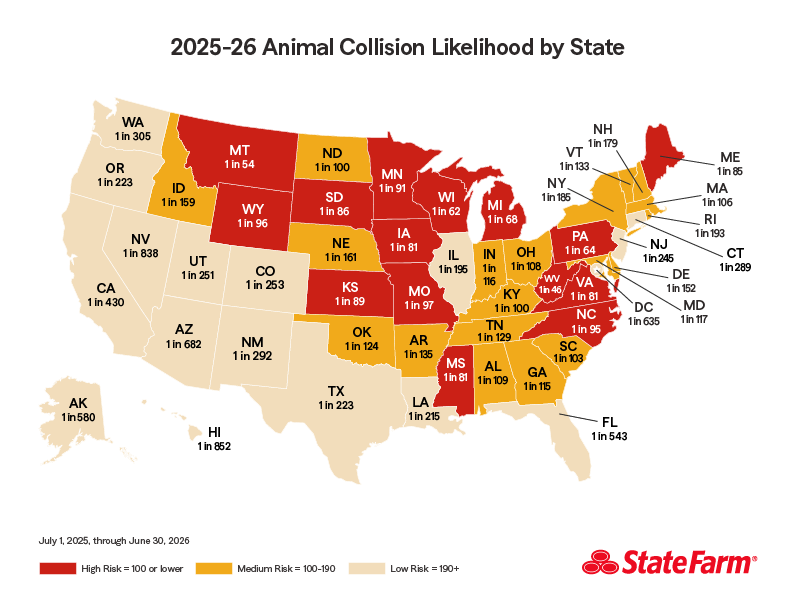
There is some encouraging news: the national likelihood of an animal collision improved from 1 in 139 last year to 1 in 145 this year. But the number and cost of these collisions show they remain a significant roadway risk.
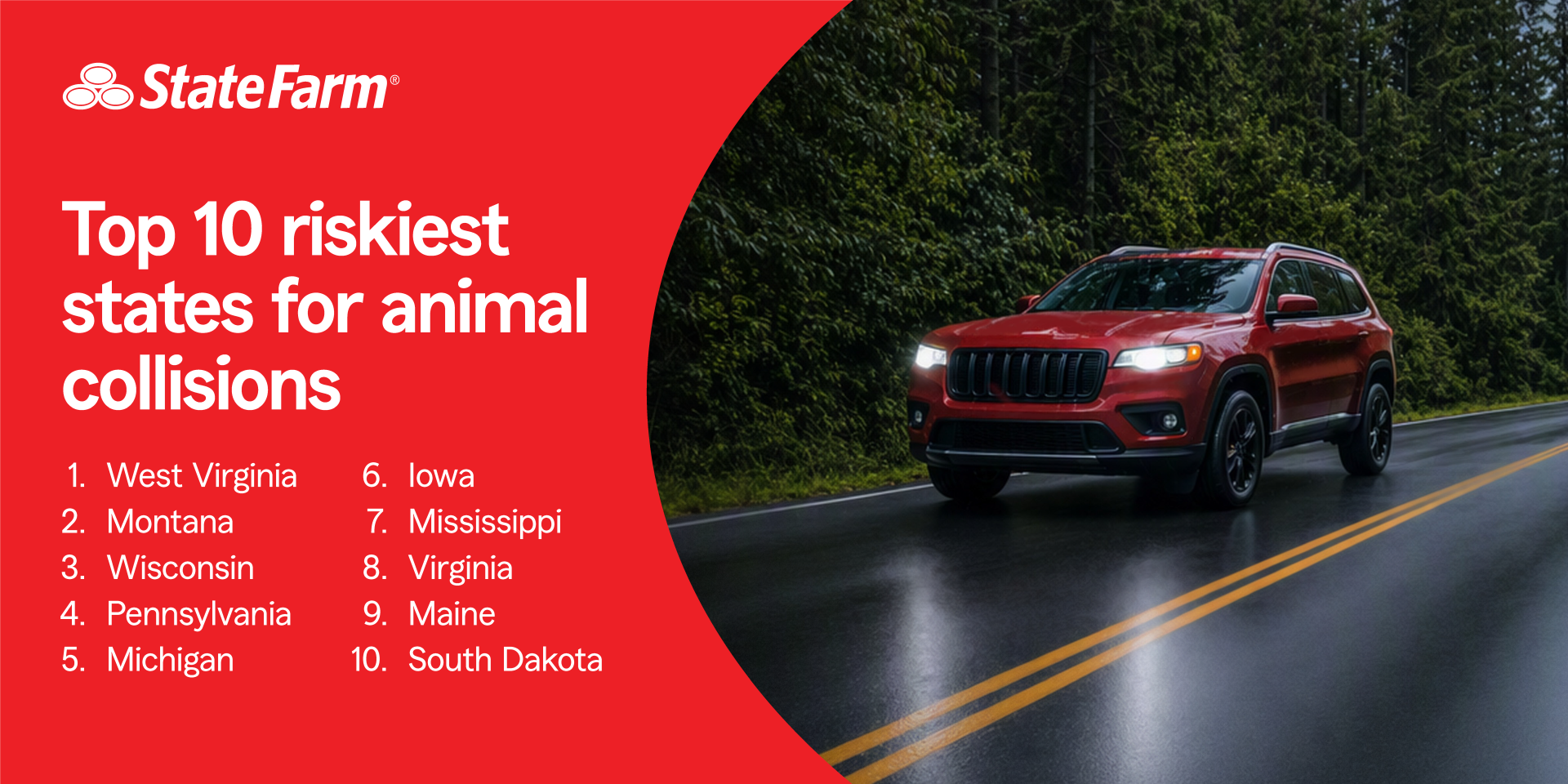
West Virginia continues to have the highest likelihood of an animal collision, with odds of 1 in 46, and has held the top spot for more than a decade. Montana ranks second at 1 in 54, followed by Wisconsin (1 in 62), Pennsylvania (1 in 64), and Michigan (1 in 68).
While West Virginia has the highest likelihood, Pennsylvania had the highest number of estimated industry claims, at approximately 141,000.
More than vehicle damage
Animal-vehicle collisions can have serious consequences for motorists, passengers, and wildlife. According to the Insurance Institute for Highway Safety, 210 people died in motor vehicle crashes involving collisions with animals in 2024.
State Farm's research initially focused on deer collisions but has expanded over time to provide a broader picture of collisions involving wild and domestic animals. Deer remain by far the most frequently struck animal, but claims also involve rodents*, dogs, raccoons, cattle, coyotes, cats, turkeys, hogs, and bears.
What drivers can do
Drivers can't always predict when an animal will enter the roadway, but a few simple steps can help reduce the risk:
- Slow down and stay alert. Drive at a speed that gives you time to react.
- Use extra caution in animal-crossing areas. Watch for signs and reduce your speed in known high-risk areas.
- Be especially alert from dusk to dawn. Animals may be more active and visibility is reduced. Use high beams when appropriate.
- Brake don't swerve. If an animal enters your path, brake firmly and stay in your lane when possible. Swerving can cause you to lose control or collide with another vehicle.
- Always wear your seatbelt.
If you have a collision
First, move your vehicle to a safe location when possible and turn on your hazard lights. Call police if the animal is blocking traffic or creating a hazard, and don't approach an injured or frightened animal.
When it's safe, document the scene and vehicle damage. Before driving away, check for leaking fluids, damaged tires, broken lights, or other hazards. Contact your insurance company to report the collision. Comprehensive coverage typically covers damage from collisions with animals, subject to the policy terms and deductible.
Putting 20 years of insight to work
After 20 years of tracking animal collisions, State Farm has learned that understanding when and where crashes happen can help drivers prepare—and help inform ways to prevent them.
Looking ahead, better infrastructure, wildlife crossings, vehicle technology, driver awareness and data-informed decisions can all play a role in reducing risk.
The goal for the next 20 years is clear: fewer collisions, fewer injuries, and safer roads for drivers and wildlife.
*Rodents are not only involved in collisions but included in claims data as an animal-related loss for damage they cause to vehicles, like chewing wires.
For over 100 years, the mission of State Farm has been to help people manage the risks of everyday life, recover from the unexpected and realize their dreams. State Farm Mutual Automobile Insurance Company and its affiliates are the largest providers of auto and home insurance combined in the United States. Its more than 19,200 agent offices and over 62,000 employees serve over 96 million policies and accounts – including auto, fire, life, health, commercial policies and financial services accounts. Commercial auto insurance, along with coverage for renters, business owners, boats and motorcycles, is also available. State Farm Mutual Automobile Insurance Company is the parent of the State Farm family of companies. State Farm is ranked No. 32 on the 2025 Fortune 500 list of largest companies. For more information, please visit http://www.statefarm.com.