
Understanding the Issues in Illinois
Illinois Weather and the Cost of Insurance
Illinois is experiencing an exceptionally active severe weather year. Through July, State Farm® customers in Illinois filed more home and auto catastrophe claims than customers in any other state, putting Illinois on pace for its highest catastrophe claim volume in a decade.
Illinois by the Numbers
- 96,000+ catastrophe weather-related home and auto claims in 2026
- Home catastrophe claims are 50% above the 10-year average
- Auto catastrophe claims are 100% above the 10-year average
- Illinois has recorded three consecutive years with more than 120 confirmed tornadoes
- As of August 19, 2026, Illinois surpassed 200 confirmed tornadoes this year.
As of July, State Farm has paid more than $799 million for storm-related losses in Illinois this year. For added context, in 2025 alone, State Farm paid $457 million in Illinois hail claims, third highest in the nation.
What Shapes the Cost of Homeowners Insurance
Illinois premiums are priced for the risk in this state – not for losses in other states. With decades of experience serving Illinois customers, State Farm draws on extensive data and expertise to understand how risks and costs are changing. We continuously review the latest information, so rates reflect the most current view of expected losses.
That means considering both the likelihood of covered losses and what those losses are expected to cost. We know affordability is a real concern for Illinois families, making it increasingly important to address the underlying factors driving those costs. Rising construction costs, severe weather, inflation and excessive litigation can all put pressure on the cost of insurance.
Our priority is being there for customers when the unexpected happens and helping them recover. That means staying financially prepared to pay claims as risks and costs change. Rates need to reflect the likelihood and expected cost of covered losses, but long-term affordability also depends on reducing the underlying risks and costs putting pressure on insurance. Illinois consumers deserve a strong insurance marketplace and meaningful progress on affordability. That means addressing the risks and cost drivers.
Work to be Done to Address Cost Drivers
State Farm will continue to engage with Illinois elected officials and advocate for a focused set of actions aimed at supporting a healthy insurance market and helping consumers navigate increasing severe-weather risks.
Priorities include advancing resiliency and home-hardening initiatives modeled on successful programs in other states; strengthening protections against post-storm predatory contractor solicitation and potential conflicts of interest involving public adjusters; and addressing legal system abuse that drives unnecessary litigation and increases costs for consumers through higher premiums.
With severe storms becoming a more prominent concern in Illinois, State Farm sees an opportunity to serve as a thought partner with lawmakers and regulators on solutions that strengthen resilience, support consumers and the broader insurance market, and help pull unnecessary costs out of insurance premiums.
Responding Today
When severe weather strikes, State Farm is there. Following late-July storms that brought nearly 100 mph winds, heavy rain and tornadoes to northern Illinois, State Farm deployed Catastrophe Claims Teams and opened a Customer Care Site in Calumet City. We welcomed elected leaders to the site to see State Farm doing what it does best – helping our customers recover.
Severe weather continued in August, generating another 2,000+ catastrophe claims in northern Illinois, followed by torrential rain and 70 mph straight-line winds in our Bloomington headquarters community. Throughout these events, State Farm Claims associates and agents have been helping customers navigate the recovery process.
Preparing for Tomorrow
Helping after a storm is only part of the equation. Long-term affordability also requires looking for ways to reduce damage before the next storm happens. That's why State Farm is investing in prevention as well as recovery.
At our Technology Research and Innovation Lab (TRAIL) in Bloomington, State Farm researchers study hail, wind and other threats and explore how stronger materials, construction practices and mitigation can better protect homes and communities.
Impact-resistant roofing is one practical way homeowners can make their homes more resilient and help reduce hail damage. When building, remodeling, or replacing a roof, homeowners can consider qualifying impact-resistant roofing materials. State Farm also offers premium discounts to eligible homeowners in many states with qualifying products.
State Farm works with the Insurance Institute for Business & Home Safety (IBHS) to advance research-backed approaches to stronger construction. Programs like FORTIFIED also demonstrate how homes can be built or retrofitted beyond standard construction practices to better withstand severe weather.
The research demonstrates how more durable construction and improved building standards can reduce damage, strengthen communities and potentially save lives.
Working with Illinois
State Farm continues to work with regulators and legislators in Illinois to help our customers.
- State Farm made a rate filing in early June 2025 indicating a Homeowners rate increase in Illinois. That filing was more than 32-pages long and is available publicly on the National Association of Insurance Commissioners (NAIC) SERFF site. It includes detailed actuarial analysis supporting the rate filing.
- On June 23, State Farm also submitted a 5-page response to questions the Department asked about the filing. No additional questions were received and the filing was closed out by the Department of Insurance on June 27.
- State Farm first learned of concerns with the rate filing through the Governor's press release in July. Since then, State Farm met with both the Director of the Illinois Department of Insurance and a Deputy Governor. There were no additional requests for information in that meeting.
- State Farm has provided the same type of information as other insurers provide in supporting rate filings in Illinois. Over the last three years, many insurers have raised Homeowners rates, citing deteriorating loss trends in Illinois; several of those increases in total exceed the State Farm increase.
- State Farm's retained counsel on these issues submitted a letter on July 31 to the Director of the Illinois of Department of Insurance clarifying our position and once again indicating our continued willingness to work with state officials.
- Unrelated to the June rate filing, the Illinois Department of Insurance in March 2024 demanded nationwide data of State Farm. This demand exceeds the legal authority of the Illinois Department of Insurance. State Farm has, therefore, not provided this data, but has asked the Illinois DOI to engage in a process that would allow an independent third-party/judge to resolve this dispute. State Farm made that request of the Department nearly one year ago.
An update to auto insurance rates
Auto insurance rates in Illinois will decrease an average of 5.7%, with some customers seeing reductions in premiums of up to 15%. Rate adjustments will apply to new and existing policies starting July 18, 2025. This decision is driven by trends projecting lower claims costs.
So, why are homeowner prices going up in Illinois?
Thank you for your trust in State Farm®. We understand no one likes to see their insurance rates increase, and we don’t take these decisions lightly. That’s why we want to provide you with some context around our approach in Illinois, where we are decreasing average auto insurance rates, and increasing average home insurance rates.
As a mutual company, State Farm is focused on serving its policyholders. Unlike companies with shareholders, our goal is not to maximize profits but to earn enough to maintain financial strength that allows us to keep the promises we make and to support future growth.
As we continue to adapt to changing conditions, we remain committed to providing you with the best possible value, service, and support. Thank you for allowing us to protect what matters most to you.
Home insurance rates are on the rise in Illinois due to rising home replacement costs and more frequent severe weather events that are driving up the cost and frequency of claims. These changes reflect broader trends in loss patterns and repair costs and are necessary to help ensure we can continue providing reliable coverage to our policyholders.
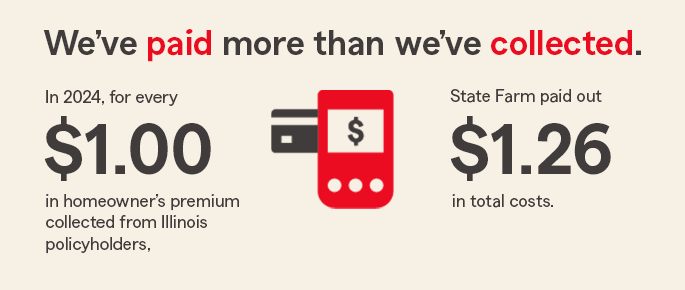
Home insurance claims costs are exceeding premiums collected. The cost of covering Illinois homeowners’ losses is exceeding the premiums we’re earning—an indication we need to adjust prices. Last year, those total costs amounted to $1.26 for every dollar in premium we collected. The year before, it was $1.30. Such losses are unsustainable.
Inflation matters. The costs of materials and labor have risen, affecting how much it costs to repair or rebuild homes. In the insurance business, the rates we charge are set in advance to cover potential future losses, including the costs to rebuild homes. As repair costs continue to rise, home insurance rates are as well.
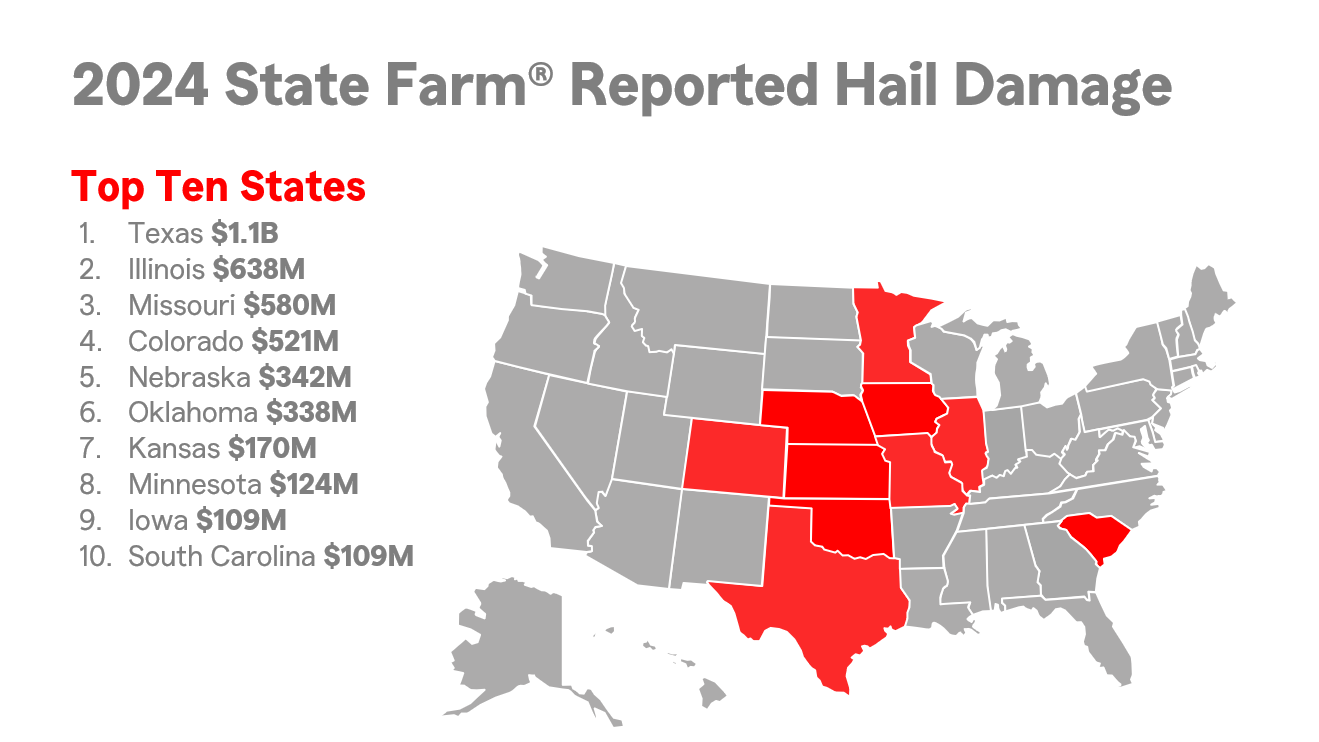
Severe weather—wind/hail and tornadoes—is increasing in Illinois. Trends in recent years indicate damaging storms are more frequent here. In fact, Illinois had more hail damage claims than any other state except Texas in 2024.
Illinois premiums are priced for the risk in this state—not for losses in other states, including wildfires, earthquakes, or hurricanes.
Contact your agent to discuss coverage options
State Farm is committed to being a responsible steward of the resources we manage, ensuring we can continue to provide the coverage you need in the face of increasing risks.
We encourage you to reach out to your State Farm agent to discuss your coverage options. Our team is here to help you navigate these changes and find the solutions that work best for you.
Wind and hail deductible explained…
One of the ways we are limiting rising premiums is through the introduction of a Wind/Hail Deductible. Illinois home insurance customers already choose deductibles related to loss perils. Illinois customers will now be required to have a minimum 1% Wind/Hail deductible as part of their home insurance policy. It will apply in instances where the cause of loss is deemed to be wind or hail. All other losses will be subject to the other deductible(s) stated within the policy.
Choosing a higher deductible is one way to reduce the premium you pay for insurance. Your State Farm agent can discuss options that are available.